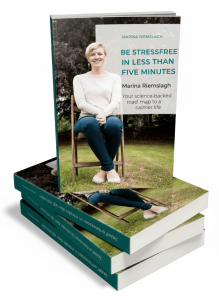
Taking rest feels like an impossible task for many people. You know you need it, but as soon as you try to relax, your thoughts begin to grind or you feel restless. This is because your nervous system is stuck in a state of constant alertness, often due to stored tension from stress or traumatic experiences.
The good news is that you can break this pattern. It does require a different approach than the usual relaxation techniques you may have already tried.
What makes resting so difficult for many people?
Taking rest is complicated by an overactive nervous system stuck in a state of constant alertness. Your body and mind have become accustomed to tension and view relaxation as unsafe or uncharted territory.
This mechanism often arises from chronic stress, traumatic experiences or prolonged periods of pressure and tension. Your nervous system learns that alertness is necessary for survival, making it difficult to turn off this mode. Even when there is no immediate threat, your system remains in a state of heightened alertness.
In addition, unconscious beliefs play a role. Perhaps you have been taught that resting means being lazy, or that there is always something important to be done. These deep-rooted thoughts make it difficult to give yourself permission for true rest.
How do you recognize that your body and mind are stuck in tension?
Signs that you are stuck in tension include constant fretting, difficulty falling asleep, tense muscles and feeling like you always have to be "on." You may also experience restlessness when you try to sit still or do nothing.
Physical signs are often the most obvious. Your shoulders are raised high, your jaws are tense, or you notice that you are holding your breath without realizing it. Your body feels tight, as if you are ready to spring into action.
Mentally, you notice that your thoughts jump from one topic to another. You make endless lists in your head and mull over situations that are yet to come or have already passed. Silence feels uncomfortable because it gives space to all the thoughts that are normally tucked away under the busyness.
Emotionally, you may find that you get irritable easily, have trouble with patience, or that small setbacks affect you more than usual. These are all signals that your system is overloaded and needs rest.
Why don't traditional relaxation techniques always work?
Traditional relaxation techniques often do not work because they only address the symptoms without removing the underlying cause of the tension. They try to impose relaxation on a system that fundamentally does not feel safe enough to let go.
Many relaxation techniques, such as breathing exercises or meditation, require you to look inward and become still. For people with stored trauma or chronic stress, this can actually create anxiety. It removes the distraction that normally helps keep difficult feelings or memories at bay.
Moreover, many methods treat relaxation as something you must "do" rather than something you are allowed to "be." This in turn creates performance pressure, which counteracts the goal of true relaxation. You then start trying to relax well, which is a contradiction.
Another reason is that many techniques are too superficial. They may help temporarily, but as soon as you get back into your normal routine, the tension returns because the deeper patterns have not been addressed.
How can you safely begin to create real peace?
Start with small moments of conscious presence without forcing yourself to relax. Focus on the here and now by focusing your attention on concrete sensory experiences, such as what you see, hear or feel, without judgment or expectations.
Start with activities that feel naturally soothing to you. This can be walking in nature, listening to music, drawing, or even just consciously drinking tea. The point is to create moments where you don't have to perform or think.
Learn to trust your body again by recognizing small signals of tension and looking at them kindly. Instead of wanting the tension gone, you can acknowledge that it is there and give yourself permission to feel it without having to do anything about it.
Build up slowly. Start with five minutes a day where you consciously don't have to do anything. No phone, no tasks, just be. If this feels too difficult, that's okay. It means your system needs time to learn to feel safety in rest. A workshop to de-stress can help you take these first steps safely.
How Live The Connection helps find inner peace
We understand that true rest requires more than superficial relaxation techniques. Our Breaking free from your past for happiness in the present-program helps you address the underlying causes of tension so that rest becomes natural again.
Our approach focuses on:
- Safely processing stored tension and trauma in your body
- Recognizing and breaking unconscious patterns that hold back peace of mind
- Developing a healthy relationship with yourself in which peace is welcome
- Practical tools you can apply independently when tension arises
With our science-based 5-step methodology, you will learn to reprogram your nervous system so that relaxation becomes a natural part of your life again. In our workshop The Core discover how to create lasting change.

 English
  Dutch
Dutch